Fish
The Vaal River is a well-known fishing water. Fish from the bank or hire a boat and guide.
Free State river country · Villiers
Tell us what you need and we'll show you where to stay, where to buy braai meat and where the fish are biting.
The Vaal River is a well-known fishing water. Fish from the bank or hire a boat and guide.
Sailing, kayaking, paddle boarding and boat cruises on one of South Africa's biggest dams.
Stock up at local butcheries and farm stalls and braai with a view.
Quiet shoreline walks and birdwatching, especially early in the morning.
Parks, playgrounds, picnics and relaxed lunches by the water.
End the day on a deck or boat while the sun sets over the river.
Situated on the border of the Free State and Mpumalanga along the Vaal River, Villiers began as an essential, high-traffic river crossing on the transport route between Durban and the booming goldfields of Johannesburg. Before modern highway bridges, the original drift could become severely congested: after heavy rains, as many as 300 ox-wagons might queue to cross. Toll houses on either side of the border between the Free State and the Zuid-Afrikaansche Republiek (Transvaal) made the crossing a lucrative one.
The town was laid out on the farms Pearson Valley and Grootdraai. It was named after the farms' owner, Lourens de Villiers.
State President of the Free State Republic F.W. Reitz formally proclaimed Villiers a town.
British forces destroyed the town: its buildings were burnt or dismantled, with the local jail famously surviving. Years later, the jail served as an overnight holding cell for Nelson Mandela.
When rainy-season floods made the drift impassable and trade ground to a halt, a ferry service (pont) was installed. For 10 shillings, transport riders could take wagons and livestock across the river.
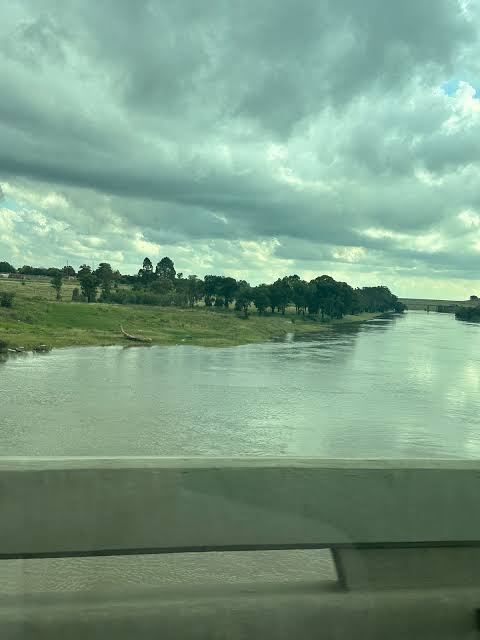
The railway line reached Villiers from nearby Frankfort. The station is no longer in use, but the historic rail bridge over the Vaal remains and is now a pedestrian crossing.
After the destruction of the war, Villiers was rapidly rebuilt using the beautiful dark sandstone of the eastern Free State. The 1904 Post Office and the local school are among the structures built in this stone.
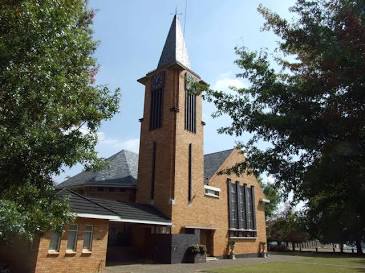
The central Dutch Reformed (NG) Church took a different direction. Designed by architects Geers & Geers and built in 1940, it is a modernist brick landmark.
Today, Villiers and the adjacent township of Qalabotjha remain an important agricultural hub and a familiar landmark for travellers crossing the Vaal River on the modern N3 highway.
Save places with “Add to plan” and they'll show up here. Your plan is stored on this device.
Get listed on this site and on the Vaal River website. Contact the site administrator to be added.